Training
Youth Mental Health Response
When a young person is struggling, good intentions are not always enough. The adults around them need a calm way to notice, listen and guide them towards the right support.
Three tiers, one curriculum, each tier matched to the role the adult plays.
“The goal is not to have the perfect words. It is to be the adult who can stay present when a young person needs someone not to look away.”
Where it comes from
Youth Mental Health Response is our school-specific framework, inspired by Mental Health First Aid principles and adapted for the roles and realities of international schools.
A standard MHFA course teaches one syllabus to a mixed room. We take the underlying first-response philosophy - spot signs, stay calm, listen without fixing, guide to help - and reshape it around the adults who actually surround a young person in a school community: parents, teachers and school leaders.
That reshaping sits on Let's Be Real's own frameworks, chief among them ANCHOR, our proprietary supportive response model. This is what we mean when we say the curriculum is independently developed.
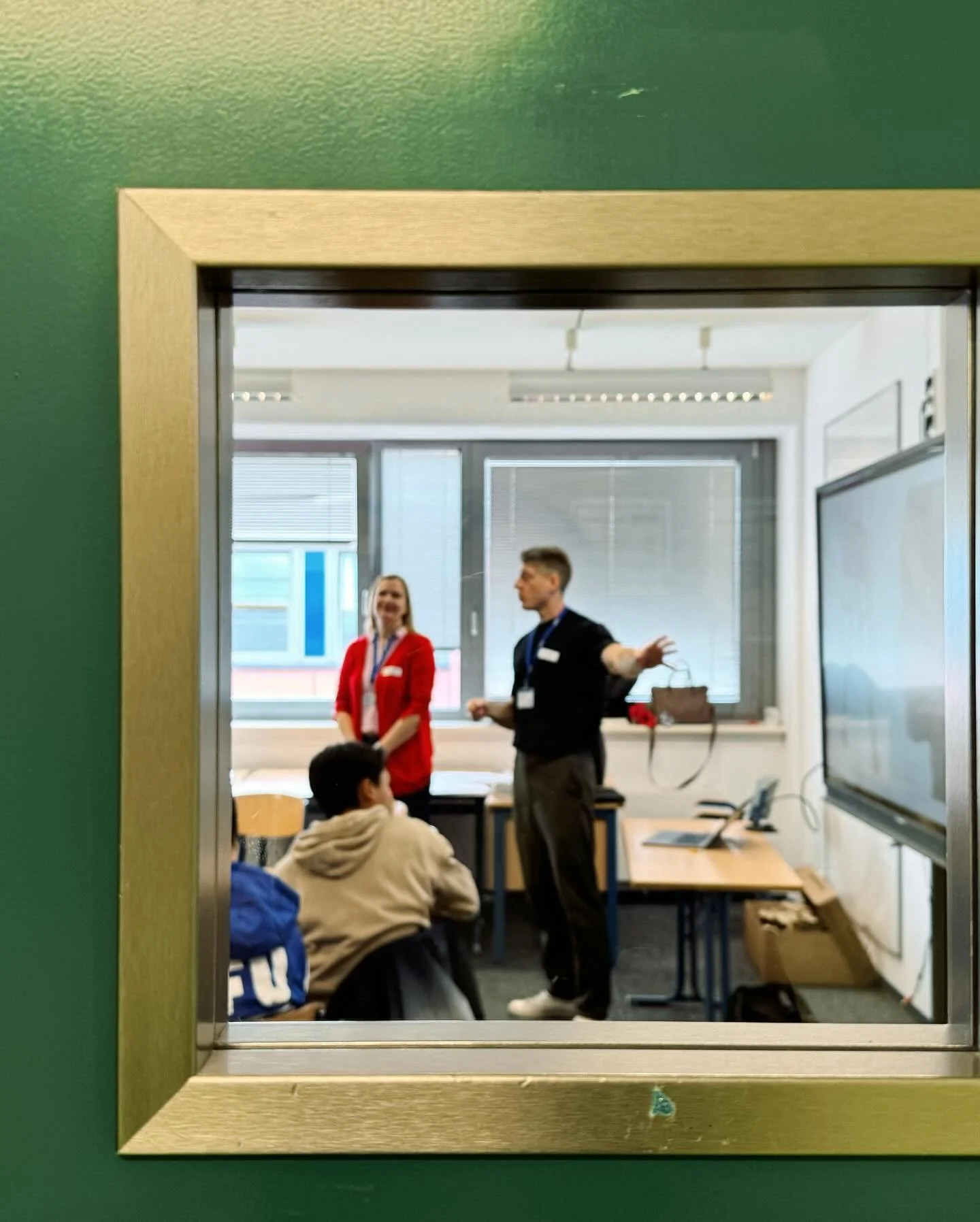
The moments this is for
Small moments. A different next step.
The work becomes real in ordinary conversations - often before anyone knows exactly what is wrong.

A parent moment
The kitchen is nearly dark. A parent hears, “I don't want to go tomorrow.” Instead of filling the silence, they stay beside their child and ask one gentle question.
The conversation stays open.

A teacher moment
A student who is usually first out of the room lingers after class. Their teacher notices, puts the papers down and gives them time to begin.
The student does not leave unseen.
Programme overview
Curriculum
A practical first-response framework built around ANCHOR, with three tiers that match depth to the adult's role. Covers adolescent mental health literacy, supportive conversation skills, escalation, safeguarding, and whole-school systems.
Target audience
- NOTICE - parents and caregivers
- HOLD - teachers and pastoral staff
- LEAD - school leaders and counsellors
Accreditation
MHFA-informed, not MHFA-accredited. The programme is independently developed by Let's Be Real and awards the LBR Youth Mental Health Response Certificate, an LBR-issued professional training certificate valid for three years. Trainers hold current professional certifications in mental health first response.
The system at a glance
Parents
NOTICE
Recognise the shifts. Hold the conversation. Know when to bring in others.
4 hrs
Teachers
HOLD
Stay present in the conversation. Hand on without dropping anyone.
1 day
Leaders
LEAD
Build the systems and conditions that let the work take root.
1 day (+1 day for HOLD)
All workshops are available in English and German.
Why three tiers and not one?
International schools don't operate like national schools. Families often move countries every two to four years. Students switch languages between lessons. The mental health support a family could access in Frankfurt looks nothing like what's available in Singapore, and the demographic walking through the front gate changes every August.
The three tiers are a response to how the work actually distributes itself in these communities. A parent is often the first to notice their child is shifting, and needs the skills for that. A school leader holds the conditions that let everyone else's work matter, and needs the skills for that. A teacher sits between them.
The depth of training matches the depth of the role.
Our ANCHOR framework
At the centre of every Let's Be Real training is ANCHOR, our supportive response framework for the moment a young person, a colleague, or your own child needs you most. It sits within the broader tradition of mental health first aid: the principle that non-clinicians, given the right framework, can offer the initial response that keeps someone safe, heard, and connected to the help they need.
The framework stays the same across the three tiers. What changes is the depth at which we work with it. A four-hour parent session focuses on the early steps in a family context. A one-day teacher session adds the institutional realities of working inside a school. A two-day leader programme works on what it takes to make the framework culturally embedded across an entire school community.
ANCHOR is grounded in the mental health literacy research literature, drawing on Kitchener and Jorm's foundational work on supportive response and the subsequent research on disclosure and safeguarding in school contexts.
- 01
A
Arrive calm
- 02
N
Notice
- 03
C
Confirm you've heard
- 04
H
Honour the limits
- 05
O
Organise support
- 06
R
Return
The tiers in detail
Tier one · Parents · 4 hours (2 x 2h)
NOTICE
For parents who want to be useful when their own child is shifting, struggling, or pulling away. Practical skills for the conversations that happen at the kitchen table, in the car, in the long silence before bed.
What we cover
- The ANCHOR framework, adapted for use inside the family
- Recognising early signs and the difference between developmentally typical change and something that warrants a closer look
- Starting and holding a supportive conversation when your child doesn't want to talk
- Knowing when, how, and to whom to escalate, including how to work with the school
- Looking after your own wellbeing while supporting your child
A 4-hour parent workshop delivered as two 2-hour live sessions. Join through your school, or directly through a Let's Be Real open cohort.
Tier two · Teachers · 1 day
HOLD
For the classroom teachers, advisors, and pastoral staff who see young people every week. Builds the confidence to spot early signs, stay present in a supportive conversation, and hand a young person on with continuity of care.
What we cover
- ANCHOR in the classroom: applying the framework across short conversations, ongoing relationships, and handover to colleagues
- Adolescent mental health literacy: the conditions students most commonly encounter, the early warning signs, and the language that helps rather than hinders
- Working with your school's existing safeguarding and pastoral structures, including documentation and the limits of your role
- The international school context: third culture experience, mobility, language, and how these shape what mental health looks like in your students
A full day, in-person where possible.

Tier three · Leaders · 1 day (+1 day for HOLD)
LEAD
For heads of pastoral care, deputy heads, counsellors, and school directors. Goes beyond first response into the systems that make everything else possible.
What we cover
- All HOLD-level content, taken to greater depth
- Designing pastoral and mental health policy that holds up in a real crisis: referral pathways, documentation, parent communication
- Supervising the youth mental health responders in your school, including reflective practice, refresher cycles, and vicarious load
- Building a whole-school mental health literacy environment
- Parent engagement strategy: bringing families into the work without it falling on individual teachers
- The international school dimension: working across cultures, languages, and transient populations
Two days, in-person where possible.
What the learning hours cover
Structured learning hours by tier
Every LBR Youth Mental Health Response Certificate is an LBR-issued professional training certificate backed by a defined set of learning hours. The tables below show exactly what is covered in each block, so schools can map the training against professional development requirements.
NOTICE
Format: Two 2-hour live sessions
Total learning hours: 4 hours
| Block | Module | What is covered | Hours |
|---|---|---|---|
| Session 1 | Youth mental health today | Prevalence, protective factors and what is different for young people in international school settings, including third culture and transition pressures. | 0.5 |
| Session 1 | Noticing early signs | Behavioural, emotional and academic changes that signal a concern; the difference between distress and disorder; neurodivergent presentations. | 0.75 |
| Session 1 | ANCHOR: A - Arrive calm and N - Notice | Regulating yourself before you respond, opening a conversation without alarm, and naming what you have noticed in plain language. | 0.75 |
| Session 2 | ANCHOR: C - Confirm you've heard and H - Honour the limits | Listening to understand, reflecting back accurately, and honouring the limits of your role without shutting the conversation down. | 0.75 |
| Session 2 | ANCHOR: O - Organise support | Who to involve at home and in school, what to share and with whom, and how referral pathways work in practice. | 0.75 |
| Session 2 | ANCHOR: R - Return, plus assessment | Following up after a conversation, looking after your own wellbeing, and a scenario-based check of the full ANCHOR sequence. | 0.5 |
| Total learning hours | 4 hours | ||
HOLD
Format: One full day, in person where possible
Total learning hours: 6 hours
| Block | Module | What is covered | Hours |
|---|---|---|---|
| Block 1 | Foundations recap and role clarity | Refreshing the ANCHOR framework and defining where a HOLD-certified staff member sits between pastoral care and clinical support. | 0.5 |
| Block 1 | ANCHOR in depth | Extended practice of each step with harder openings, reluctant students and conversations that surface more than expected. | 1.5 |
| Block 2 | Disclosure and risk conversations | Responding to disclosures of self-harm, suicidal thoughts, abuse or eating difficulties; asking direct questions safely. | 1.0 |
| Block 2 | Boundaries and confidentiality | Confidentiality limits, safeguarding duties, record keeping, and holding a supportive relationship without taking on a clinical role. | 0.75 |
| Block 3 | Referral pathways and family partnership | Internal escalation, working with counsellors and external services, and difficult conversations with parents and carers. | 1.0 |
| Block 3 | Scenario assessment | Facilitated scenario practice assessed against the HOLD competencies, with structured feedback for each participant. | 1.0 |
| Block 3 | Staff wellbeing and sustainability | Recognising the load of supporting students, supervision and peer support, and knowing when to hand over. | 0.25 |
| Total learning hours | 6 hours | ||
LEAD
Format: One day, following HOLD certification
Total learning hours: 6 hours, plus 6 hours HOLD prerequisite
| Block | Module | What is covered | Hours |
|---|---|---|---|
| Block 1 | Whole-school response systems | Mapping the current response across pastoral, safeguarding and counselling, and identifying where students fall through gaps. | 1.0 |
| Block 1 | Policy and protocol design | Writing usable response protocols, thresholds and escalation routes that align with safeguarding and local legal duties. | 1.0 |
| Block 2 | Leading staff capability | Planning tier coverage across the school, briefing new staff, running refreshers and sustaining practice between formal training. | 1.0 |
| Block 2 | Crisis coordination | Coordinating an immediate response, communication with families and staff, and post-incident review and recovery. | 1.0 |
| Block 3 | External agencies and family partnership | Building relationships with local services across jurisdictions, and leading complex conversations with families. | 0.75 |
| Block 3 | Measurement and review | Indicators worth tracking, gathering staff and student feedback, and reporting capability to leadership and governors. | 0.75 |
| Block 3 | Leadership scenario assessment | A whole-school scenario assessed against the LEAD competencies, covering decision-making, delegation and communication. | 0.5 |
| Total learning hours | 6 hours, plus 6 hours HOLD prerequisite | ||
Hours shown are contact learning hours with a facilitator. Scenario-based assessment is embedded in the final block of each tier rather than sat as a separate exam. Schools that need a formal record for professional development can request an hours breakdown per participant.