Build a school community that knows what to do when a young person is struggling.
One joined-up approach to mental health literacy, early response and whole-school wellbeing. For students, staff and families.
Because no young person should have to carry it alone just because the adults who care about them are not sure what to say next. We help schools find those words - together.
A friendly first conversation - no pitch, no obligation.

“The aim is not to turn every adult into a therapist. It is to help every young person find an adult who can stay calm, listen and know what comes next.”
Not therapy. Not diagnosis. Capability.
We train the adults in your school community to notice early, respond calmly and hand over correctly. Counselling stays with your counsellors - and happens earlier, because more adults know when to refer.
Choose your path
How we work with schools
Understand → Respond → Embed
Three steps, in this order. Start where your school feels least sure.
- 01UnderstandUnderstand: Mental Health Literacy →Everyone learns the same words for what they are seeing.Fewer things go unnoticed
- 02RespondRespond: Youth Mental Health Response →Staff and parents know what to say in the first ten minutes.No one freezes
- 03EmbedEmbed: Whole-School Capability →It becomes how your school works, not a one-off training day.It lasts
The moments this is for
The moment. The response. The difference.
The work becomes real in ordinary conversations - often before anyone knows exactly what is wrong. Each of these moments has a shape: what happens, how a prepared adult responds, and what changes because of it.

A parent moment
- The moment
- The kitchen is nearly dark. A parent hears, “I'm fine.” They know their child is not.
- The response
- They notice, don't interrogate, and keep the door open - one gentle question, no deadline for the conversation.
- The difference
- The conversation stays open for the day their child is ready to use it.

A teacher moment
- The moment
- A student who is usually first out of the room lingers after class.
- The response
- Their teacher notices, pauses, puts the papers down and gives them time to begin.
- The difference
- The student does not leave unseen.

A staff moment
- The moment
- A staff member hears something concerning from a student - something beyond what a conversation alone can carry.
- The response
- They stay calm, know the limits of their role, and know exactly where to hand over.
- The difference
- The student reaches the right support quickly, and the adult is not left carrying it alone.
Why Let's Be Real
Founded by a family coach and a school leader who kept seeing the same gap.
Let's Be Real - Mental Health for Young Minds was founded in 2024 by Jacqueline Klemke and Nick Praulins. We saw the same gap from two sides - the coaching room and the school corridor - and decided to build the bridge ourselves.
We build the capability schools need to recognise, talk about and respond to young people's mental health.
Our mission
Every young person should be surrounded by adults who can recognise what they are going through, hold the conversation, and know where to go next.
Our founders
A mental health & wellbeing consultant and systemic couples & family coach, and a school leader with over twenty years in international education - two perspectives on the same problem.
Evidence-informed
Our curriculum is independently developed and MHFA-informed, and grounded in WHO adolescent mental health data and peer-reviewed research on literacy and destigmatisation.
Commercial entry point
What does your school need?
Pick the statement that matches where you are right now. We will take you to the programme that answers it.
We need to understand what's happening
Wellbeing Pulse Check
A short, structured review of wellbeing patterns, risks and readiness before you commit to a full programme.
Learn moreWe need staff to know how to respond
Youth Mental Health Response
NOTICE, HOLD and LEAD tiers that give each adult role a clear, practical response path.
Learn moreWe need students to understand mental health
Mental Health Literacy
Shared modules for students, staff and parents so the whole community speaks the same language.
Learn moreWe need the whole school aligned
Whole-School Capability
Audit, strategy, training and implementation support to embed mental health capability across the school.
Learn more
How it works
Literacy and response belong together.
What research shows
Learning about mental health, and meeting people with lived experience, reduces stigmatising attitudes in young people and makes them more willing to seek help.
See the sourcesWhat our approach is designed to do
Give the whole community a shared language, and give adults clear first steps and handover points, so a young person who speaks up stays connected to support.
- Our approach
Name it
A common language for signs, feelings and limits makes talking about mental health ordinary.
- Our approach
Respond
Calm first steps and clear handover points keep a young person connected to support.
The evidence
Published researchWhat the research actually shows about stigma and mental health literacy in schools.
A 2025 systematic review and meta-analysis of 97 studies of anti-stigma programmes for young people found they increased knowledge about mental health, reduced stigmatising attitudes and improved intentions to seek help.
- 97 studies
- A 2025 review in JAMA Network Open brought together 97 studies on reducing stigma, covering 43,852 young people aged 10 to 24.
- Knowledge grew
- Young people knew more about mental health afterwards.
- More willing to ask
- The same review found young people became more open to asking for help, and more likely to say they would - the step that comes just before actually reaching out.
- Around half by 14
- Around half of mental health conditions begin by age 14.
Outcomes
Practical Skills for Real Conversations
These four are programme targets, not published results: we agree them with you before we start and then measure them with short pre- and post-programme surveys for students, staff, and parents. Where a claim comes from a published study instead, it is labelled as research and linked to its source.
Confidence
Programme targetThe relief of knowing what to do
Staff and parents report higher confidence in starting a conversation about mental health and staying in it, rather than passing it on straight away.
Measured: self-rated confidence before and after training
Earlier identification
Programme targetConcerns are spotted sooner
Trained staff recognise early signs and raise them through the school's own routes, so support starts before a situation escalates.
Measured: recognition scenarios and referral timing in school records
Help-seeking
Programme targetYoung people ask for support
Students say they are more willing to speak to an adult or a friend, and can name at least two people and one service they would go to.
Measured: help-seeking intention scales, pre and post
Parent-child talk
Programme targetConversations continue at home
Parents report more frequent and less anxious conversations with their children about feelings, stress, and asking for help.
Measured: parent survey at the workshop and eight weeks later
How we label evidence
- Published research
- A finding from a peer-reviewed study or official body, with a link to the source.
- Our approach
- How our programmes are designed to work - a practice proposition built on the research, not a tested finding.
- Programme target
- An outcome we agree with you before we start and then measure - not a result we are claiming yet.
- Observed in sessions
- Something we consistently see and hear in sessions, reported as feedback rather than data.
- Measured in our cohorts
- A result from our own pre- and post-programme surveys with a named cohort.
Baseline and follow-up data stay with your school. We report the change, not individual answers.
Trusted by
Trusted by Educators and Families
Our work sits inside school communities across Germany, Europe and beyond, in English and German.
International schools
Primary through secondary, working with teaching staff, pastoral teams and leadership.
Parent communities
PTAs and parent associations hosting evening workshops for families across year groups.
Educational organisations
Networks and member organisations, including ECIS, bringing training to their schools.
Trainers certified in Youth MHFA
Our Youth Mental Health Response training is delivered by qualified Youth Mental Health First Aiders. The curriculum itself is independently developed, not MHFA-accredited.
Who we work with
Schools are where we start.
We help schools build the shared language and response skills that extend into classrooms, homes and the wider community. Parents, educators and youth organisations carry that language outward - the pathways below show how each group joins in.
Primary · The school is the client
- Whole-school Mental Health Literacy programme
- Tiered staff response training: NOTICE, HOLD, LEAD
- Planning that fits your calendar and safeguarding policy
Inside the school
- LBR Youth Mental Health Response Certificate
- Hold a first conversation without carrying it alone
- Clear handover routes to the people who take it further
Secondary · Parents & families
- NOTICE parent workshops in English and German
- Language that keeps the conversation open at home
- What to do when you are worried and unsure
Extension · Youth organisations
- Training for youth, sports and community organisations
- Wellbeing pulse checks and leadership sessions
- Delivered in English and German, on site or online
Who you'll be working with
We know what it feels like to be the adult who isn't sure what to say.
Behind the framework are two people who have sat in staffrooms, counselling rooms and kitchen-table conversations – and know how hard the first sentence can be.
“For twenty years I translated what people said. Coaching and family counselling taught me to hear what they couldn't say – the worry, the expectations, the fear of getting it wrong. That's where young people's struggles often sit, and where the adults around them get stuck.”
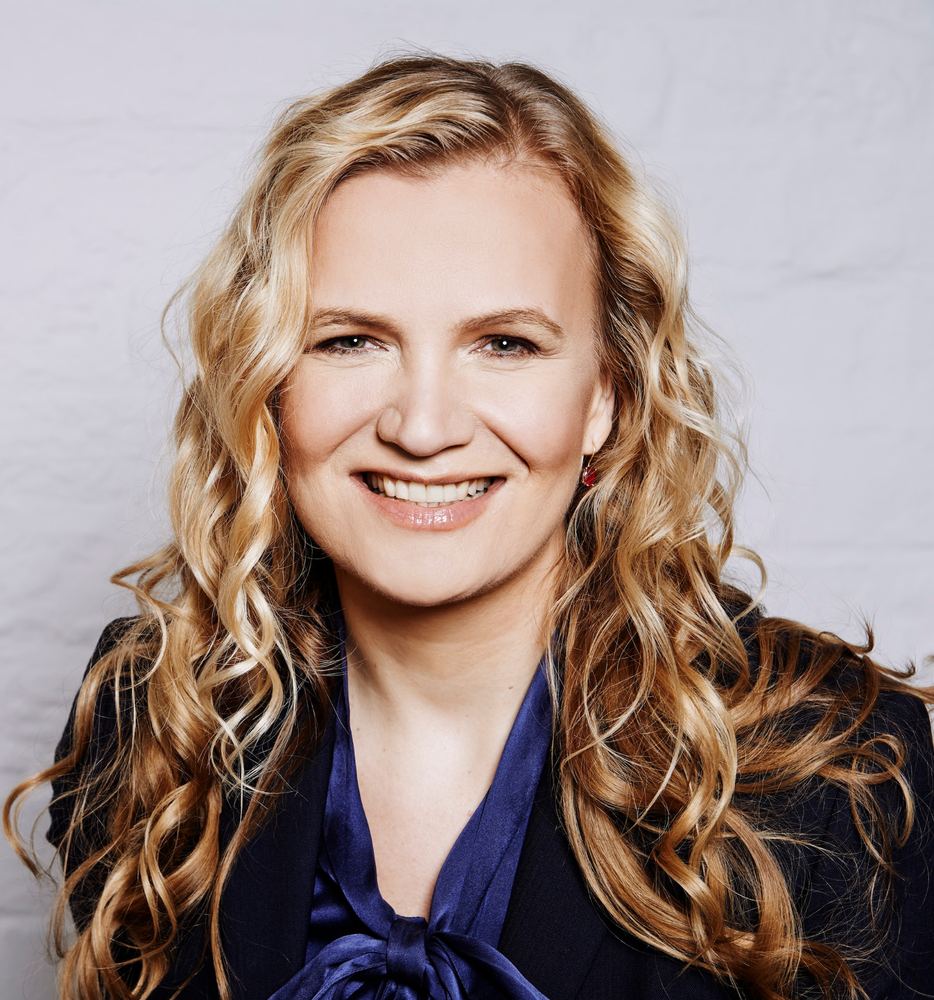
Owner & Co-Founder
- Mental Health & Wellbeing Consultant
- Systemic Couples & Family Coach
- Certified Train-the-Trainer
“As a school leader I saw good teachers go quiet because they were afraid of saying the wrong thing. Nobody had given them the words or the next step. I don't want another staff member to feel that alone in that moment.”

Associate Partner & Co-Founder
- Former school leader - 20+ years in education and leadership
- Senior Communication and Educational Consultant
- Certified First Aid for Mental Health (FA4MH) Instructor
Chris Benson — Guest Speaker for HOLD
“I have lived neurodivergence from every seat at the table – as a pupil, a teacher, a headteacher and a parent. That's how I know the difference it makes when adults are given the words to respond, not just the intention to help.”

Guest Speaker - Neurodivergence and Education
- Guest speaker on neurodivergence and education
- Education Lead, ADHD UK
- Former headteacher - 15 years in the UK and internationally
- Expert session on neurodivergence and mental health for HOLD
Kelly Lynn Redden — Specialist neurodiversity training for schools
“For thirty years I have worked with children and young people whose behaviour was read as a problem long before anyone asked what they were actually experiencing. When a school looks past the label to the individual – their strengths, their sensory world, what they need in order to learn – the adjustments that follow help every child, not only the one with a diagnosis.”

Trainer - ADHD, Autism & Dyslexia
- 30+ years of international experience across education, coaching, consulting and training
- Master's degree in Special Education (children with autism)
- Postgraduate Diploma in Analysis and Intervention in Learning Disabilities
- Bespoke INSET days, workshops and twilight sessions
Our principle
Build capability, not dependency.
We are a capability partner for schools, not a provider of one-off workshops. The goal is that your people can do this without us.
Your staff, trained
Knowledge sits with your team, not with an outside trainer.
Your framework, handed over
Shared language, steps and referral routes stay in your school.
Your refresh cycle
New staff and families are brought in, so expertise survives turnover.
Parent workshops
Next parent workshop
NOTICE — November
1 & 8 November 2026
Online · German
Youth Mental Health Response training
NOTICE (4 hours), HOLD (1 day) and LEAD (1 day, with HOLD as a prerequisite) run on request for schools and organisations, in English or German. Tell us your term dates and we will build the schedule around them.
Next steps
What happens after you get in touch
No pressure, no sales script. Three calm steps, so you always know what comes next.
You are weighing up whether this fits your school, your calendar and your budget.
- 1
You tell us where your school is
A few lines about your setting, the year groups involved and what prompted you to reach out. Nothing formal is needed.
- 2
We reply with two or three honest options
Within two working days you get formats that fit your calendar, indicative timings and costs, and a straight answer if we are not the right fit.
- 3
You decide, in your own time
If a 20-minute call would help, pick a time. You leave with a written recommendation you can share with your leadership team.
A 20-minute conversation, with no pitch and no obligation.