Let's Be Real - Mental Health for Young Minds
The Blog
Writing on young people's mental health, mental health literacy, neurodivergence and the culture that helps school communities thrive.
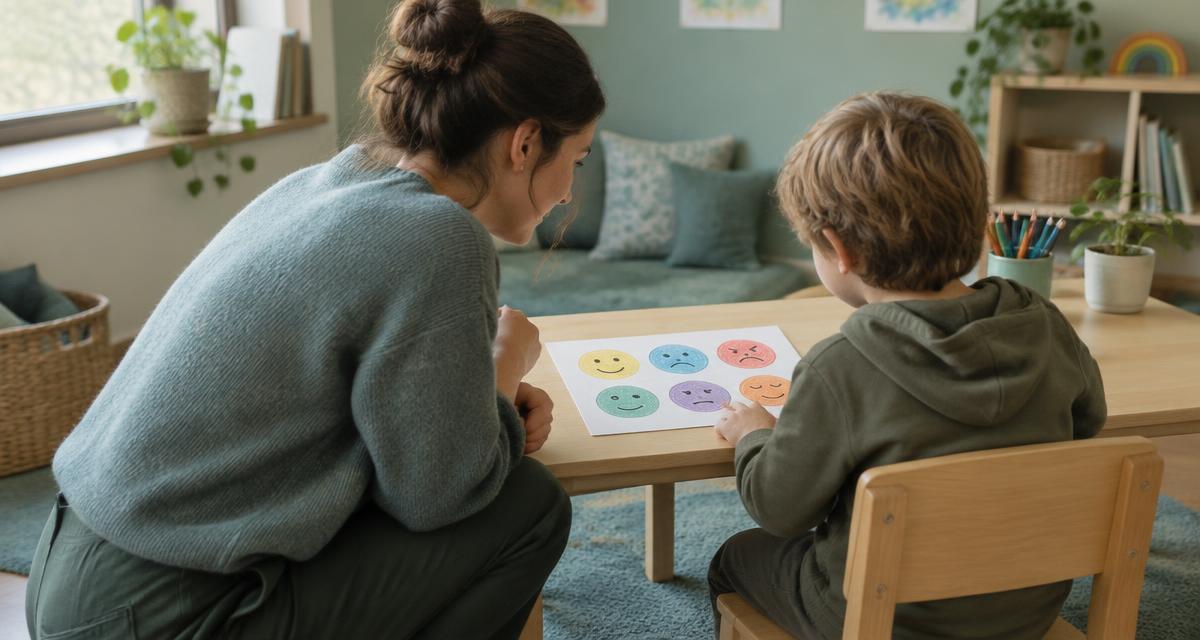
Emotional Literacy: Teaching Children to Name Their Feelings Without Judging Them
A feeling without a name is hard to ask for help with. How adults can teach children emotional vocabulary without judging feelings, what helps children who struggle to name emotions, how neurodivergent and neurotypical children may differ, and which difficulties often come with (social) anxiety.
Read the full article: Emotional Literacy: Teaching Children to Name Their Feelings Without Judging Them
“I Don’t Want Them to Know”: Stigma and Neurodivergent Students
When a diagnosis becomes a label in the classroom, fear of judgement can become a burden of its own. One 10-year-old’s story shows why supporting neurodivergent students means working with the whole school community, not only the individual child.
Read the full article: “I Don’t Want Them to Know”: Stigma and Neurodivergent Students
ADHD Awareness Month: Different Brains, Real Strengths
October is ADHD Awareness Month. Beyond the statistics, this article looks at the strengths that often come with ADHD — creativity, energy, hyperfocus and original thinking — and why ADHD can look very different from one young person to another, so schools need customised approaches rather than one-size-fits-all support.
Read the full article: ADHD Awareness Month: Different Brains, Real Strengths
Welcome, Chris Benson: Neurodivergence and Education Specialist
Chris Benson joins Let's Be Real as our Neurodivergence and Education Specialist. Every HOLD training now includes a one-hour expert session with Chris on how neurodivergence can affect mental health and how to adapt supportive conversations.
Read the full article: Welcome, Chris Benson: Neurodivergence and Education Specialist
Reducing Stigma: Why It Decides Whether Young People Open Up
Most young people who struggle stay silent not because no one is there, but because they fear what speaking up will cost them. This article explains how stigma keeps people quiet, what young people are listening for, and how adults and schools can make opening up feel safe and normal.
Read the full article: Reducing Stigma: Why It Decides Whether Young People Open Up
How to Talk to a Teenager Who Won't Talk
Shrugs, one-word answers and closed doors can leave parents feeling shut out. This article explains why teenagers go quiet and shares gentle, practical ways to keep connection alive, from side-by-side conversations to listening without rushing to fix.
Read the full article: How to Talk to a Teenager Who Won't Talk
Teenage Withdrawal: When Should Parents Worry?
Needing more privacy is a normal part of growing up, but some withdrawal is a sign that a young person is struggling. This article helps parents tell the difference, start a caring conversation and know when and where to seek support.
Read the full article: Teenage Withdrawal: When Should Parents Worry?
How Social Media Affects Teenage Self-Worth
Social media can be a place of connection and creativity, and a constant mirror that measures looks and popularity. This article explores how feeds shape teenage self-worth and offers conversation starters and small changes that help.
Read the full article: How Social Media Affects Teenage Self-WorthNeurodivergence and Mental Health: What Schools Miss
Neurodivergent students often experience distress in ways standard wellbeing guidance was never written for. This article looks at how anxiety and burnout show up differently, why the usual supportive conversation can misfire, and what schools can change so a shared mental health language includes every mind.
Read the full article: Neurodivergence and Mental Health: What Schools MissPublished in ECIS Insights
Our articles in the ECIS Insights Magazine
Jacqueline Klemke and Nick Praulins wrote a two-part series for the Educational Collaborative for International Schools on the language gap behind school mental health work.
ECIS Insights · Part 1 ·
The Language Gap: Why Your School's Mental Health Investments Aren't Working
Four voices from the same school community, each isolated by the absence of a shared language - and why well-funded wellbeing work still fails to land.
Read on ecis.org: The Language Gap: Why Your School's Mental Health Investments Aren't WorkingECIS Insights · Part 2 ·
Building Shared Mental Health Literacy in Schools
What it takes to build one language for mental health across staff, students and parents, and how schools make it stick.
Read on ecis.org: Building Shared Mental Health Literacy in Schools
Subscribe by topic
RSS feeds with full article text and publication dates.
Recommended next step
Mental health training for schools
Our articles are written from the training room, so the natural next step is seeing how a whole-school programme is built.
Whole-school programmes for staff, students and families, in English and German.
Book a school discovery callFrom reading to training
Turn this into something your community can practise
These guides are the thinking behind our programmes. When you are ready to put it into practice, here is where it becomes live training.
- Mental health training for schoolsWhole-school programmes for staff, students and families, in English and German.See the programme
- Youth Mental Health ResponseMHFA-informed response training: staff learn to NOTICE, HOLD and LEAD.See the programme
- NOTICE parent workshopA 4-hour parent workshop delivered as two 2-hour live sessions.See the programme