They're Not Just Boys, They're Men in the Making: Building A Future Where Strength Includes Mental Health
By Jacqueline Klemke
In a world that too often tells boys to hide their feelings, it's time we teach them that strength also means being vulnerable. A practical call to action for parents, mentors and educators to support boys' mental health.
Listen: They're Not Just Boys, They're Men in the Making: Building A Future Where Strength Includes Mental Health
American English · AI-narrated
Listen to Jacqueline Klemke explain the ideas explored in this article. In a world that too often tells boys to hide their feelings, it's time we teach them that strength also means being vulnerable. A practical call to action for parents, mentors and educators to support boys' mental health.
Read the full article
„Being vulnerable is not a weakness – it’s a strength.” – Dwayne “The Rock” Johnson
„Being vulnerable is not a weakness – it’s a strength.” – Dwayne “The Rock” Johnson
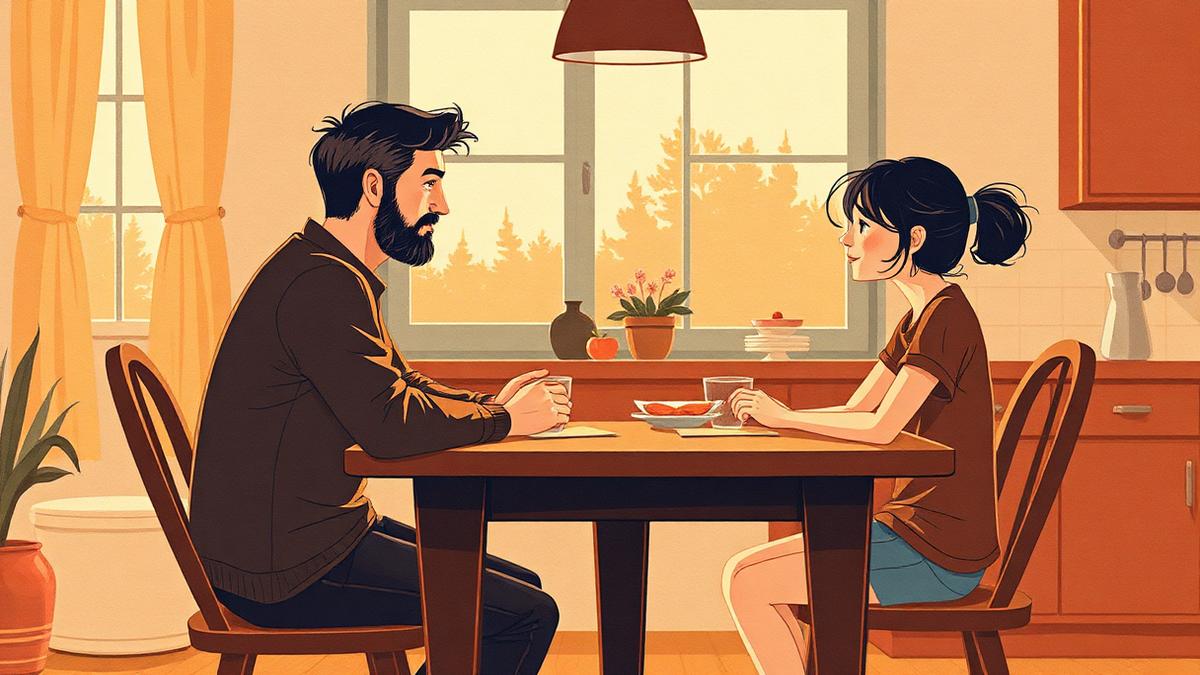
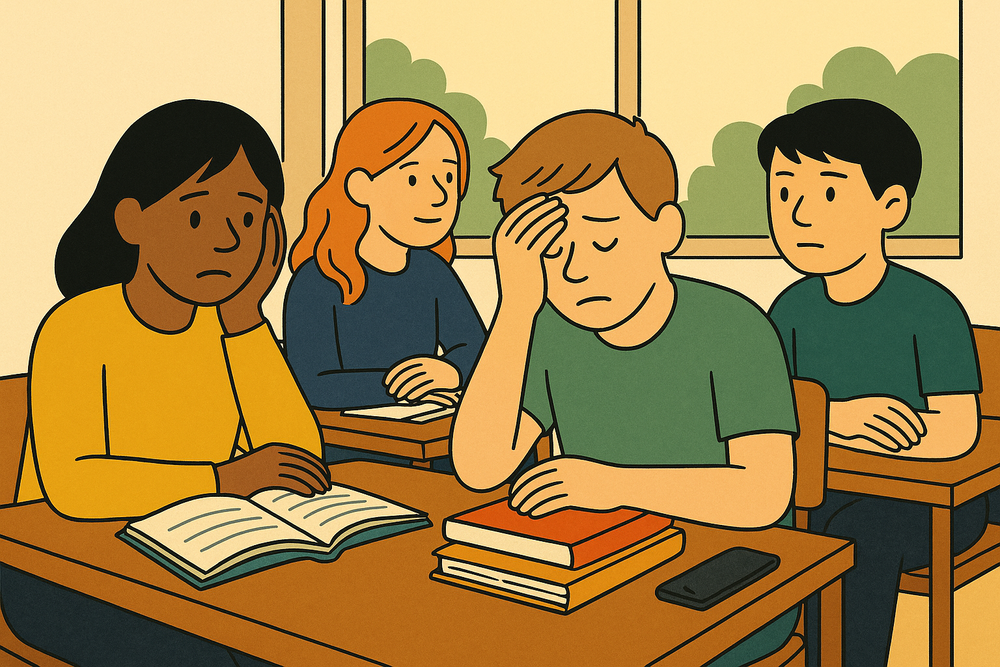
I remember a teenage boy who was seeing me as a life coach. We had discussed his relationships with family, friends and classmates when he suddenly stopped talking, looked me in the eye and said: “No one can ever find out about this. If any of my classmates find out that I see you, I will be done.” I asked why. He responded: “Because they will see me as a psycho.” This boy was not faced with a mental health challenge. He struggled with the experience of being a teenager. Still, he considered seeing someone that supports him in this phase as a weakness, as something that must be kept under a blanket of silence.
And he was no exception. Boys and men are particularly underserved and under-examined.
Why?
They report symptoms of mental health conditions at similar rates to girls and women, but often do not seek help due to societal stigma or gender norms.
Boys receive and absorb all kinds of direct or indirect stereotypical messages. To man up. To act like a man. To be tough. To take risks. I hope we have slowly but surely overcome the “boys don’t cry” bit, though this might be wishful thinking.
William Doan - From Childhood to Boyhood.
If boys cover themselves in mud at a playground, adults will say something like: “Oh well, he is just being a boy.” If girls do the same, adults might suggest (implicitly or explicitly) that girls don’t/shouldn’t do this kind of thing.
1 in 10 men experience anxiety or depression, but less than half receive treatment.
Boys and men show a consistently higher prevalence of ADHD than women.
Men die by suicide at 4 times the rate of women.
In the US, reports of financial sextortion to the National Center for Missing & Exploited Children rose from about 10,700 in 2022 to nearly 27,000 in 2023, and research by Thorn found that around 90% of victims were boys aged 14 to 17. Some of these cases resulted in these boys committing suicide.
So what can we do?
Building strong relationships and connection, normalizing talking about emotions, raising awareness and most importantly: LISTEN.
Here’s the impact this can have:
- Building relationships: Adults, especially fathers, uncles, male coaches and mentors are key in this. Practice what you preach. Engage and model healthy coping skills. Act as role models and help tween and teen boys identify and talk about their emotions. Teach them that they are not a weakness, but deeply human and OK!
- Adults, especially fathers, uncles, male coaches and mentors are key in this. Practice what you preach. Engage and model healthy coping skills.
- Act as role models and help tween and teen boys identify and talk about their emotions. Teach them that they are not a weakness, but deeply human and OK!
- Fostering connection: Encourage participation in sports, art, music, etc. Coaches and instructors can build special connections. Act as mentors, as a trusted person that is not mom or dad. Someone they can turn to.
- Encourage participation in sports, art, music, etc.
- Coaches and instructors can build special connections. Act as mentors, as a trusted person that is not mom or dad. Someone they can turn to.
- Model and teach mental health awareness: You don’t need to be an expert. A general awareness of mental health matters, of potential signs is sufficient. Because it’s really about …
- You don’t need to be an expert. A general awareness of mental health matters, of potential signs is sufficient. Because it’s really about …
- Listening without judgment: Listen without prejudice. Listen without stereotypes. Listen without stigma. Listen actively. A tool that is widely cited, but that takes a bit of practice to apply in the real world.
- Listen without prejudice. Listen without stereotypes. Listen without stigma.
- Listen actively. A tool that is widely cited, but that takes a bit of practice to apply in the real world.
Why Parents Should Become Mental Health First Aiders
Our tweens and teens are navigating an increasingly complex world, and often silently struggle under the weight.
- 1 in 5 adolescents between 12–18 faces a diagnosable mental health condition.
- A staggering 64% of teens who experience mental health issues don’t seek help.
- Adults aren’t immune: about 20% of mothers , 15% of fathers , and 18% of teens report symptoms of anxiety, and those issues can ripple across the family.
- But most importantly because being a Mental Health First Aider will bring your family closer together. The conversation starters we will talk about will help the entire family and build bridges that make those challenging tween and teen years just a bit easier for parents. Communication is key. But not just communication. Listening without judgment. This may sound easy, but in the heat of everyday life it can be quite daunting at times.
What MHFA-informed response training offers parents:
- Spotting early signs: Learn to recognize behavioral and emotional cues before issues escalate.
- Acting with confidence: No guesswork, just an evidence-based action plan for crisis and non-crisis moments, built to meet your teen where they are.
- Reducing stigma: When parents understand mental health, we foster safe, honest environments at home.
- Strengthening family resilience: Training empowers you to support not just your teen, but your entire family’s well-being.
Why It Matters Now
- Mental health struggles often go unnoticed, untreated for months or even years .
- The sooner we act, the better the outcomes, early intervention is key .
MHFA-informed response training can improve parental knowledge, confidence, and ability to respond.
Here are 5 essential lessons we need to teach boys about men’s mental health: lessons that challenge outdated stereotypes and build emotionally healthy, self-aware young men:
1. Emotions Are Not Weakness: they’re Human
Crying, feeling sad, anxious, or overwhelmed doesn’t make you “less of a man.” It makes you human. Boys need to learn that emotions aren’t shameful; they're signals, not flaws.
Teach: “It’s okay to feel and it’s okay to talk about it.”
2. You Don’t Have to Do It Alone
Asking for help is a sign of self-awareness, not failure. Too many boys grow up believing they need to “man up” and suffer in silence.
Teach: “Strong people know when to reach out.”
3. Mental Health Needs Care; Just Like Physical Health
If you broke your arm, you’d see a doctor. If your thoughts and feelings are hurting, you can - and should - seek support too. Therapy, talking to a mentor, or taking a break are all valid and important.
Teach: “Mental health is health.”
4. Anger Isn’t the Only Emotion You’re Allowed to Show
Many boys are taught that anger is the only "acceptable" emotion. But sadness, fear, shame, and joy are all part of the full emotional spectrum.
Teach: “There are many ways to express what you feel and all of them are valid.”
5. Being a Man Means Being True to Yourself
Masculinity isn't one-size-fits-all. Let boys explore their identity, interests, and emotions without fear of judgment or ridicule. Whether they're sensitive, strong, creative, quiet, or expressive; they’re enough .
Teach: “There’s no one way to be a man.”
Parents trained through an MHFA-informed response programme aren’t therapists. They can become calmer, more confident first responders when their children need support, building bridges of trust, safety, and openness.
Picture source:
William Doan, A darkness made visible: Creating art to cope with the effects of mental illness, in Milwaukee Independent, 10 June 2020 ( http://www.milwaukeeindependent.com/syndicated/darkness-made-visible-creating-art-cope-affects-mental-illness/ )
Evidence and sources informing this article: WHO: Adolescent mental health (opens in a new tab); Song et al., Global Mental Health, 2023 (opens in a new tab).
Putting this into practice in the classroom
A classroom example
At the end of a lesson, a Year 10 student lingers and says, "I can't do this anymore." The teacher has a class arriving in three minutes. She stays calm, thanks him for telling her, asks one open question, and says honestly that she needs to share this with the safeguarding lead to keep him safe. She walks him to the pastoral office and records what was said, in his words, the same day.
Words you can use
- "Thank you for telling me. I'm glad you did."
- "Can you tell me a bit more about what's been happening?"
- "I can't keep this just between us, because I want you to be safe. Here's who I'll talk to and what happens next."
Implementation checklist
- Stay calm and give the student your full attention, even briefly.
- Listen and reflect back; don't promise confidentiality.
- Ask directly about safety if you are worried.
- Pass the concern to your safeguarding lead the same day.
- Write down what was said, in the student's words, with date and time.
Research and guidance behind this
- UK Department for Education: Mental health and behaviour in schools – Guidance on mental health and behaviour for school staff.
- UK Department for Education: Keeping children safe in education – Statutory safeguarding guidance on responding to concerns.
- Song et al., Global Mental Health, 2023 – Meta-analysis of interventions that reduce mental health stigma among young people.
Originally published on letsbe-real.eu.