Why School Leaders Need Youth Mental Health Response Training
By Nick Praulins

Why independently developed, MHFA-informed response training matters for school leaders, especially in international schools across Europe.
Listen: Why School Leaders Need Youth Mental Health Response Training
American English · AI-narrated
Listen to Nick Praulins explain the ideas explored in this article. Why independently developed, MHFA-informed response training matters for school leaders, especially in international schools across Europe.
Read the full article
Mental health isn’t an optional topic
If you lead a school today - whether in Frankfurt, Berlin, Zurich, or Stockholm - you know that mental health issues are more visible than ever. Students are navigating a world of constant stress, and teachers sometimes find themselves running on empty.
As a school leader, you probably wear a dozen hats. One of the most important is helping your community respond safely when someone is struggling. That is why practical mental health response training matters.
What Mental Health First Aid contributes
Mental Health First Aid (MHFA) is an established external programme that teaches adults how to recognise possible mental health problems, offer initial support and guide someone towards appropriate help. Its first-response principles include how to:
- Spot the early signs of mental health challenges
- Listen without judgment
- Offer calm, practical support
- Guide someone towards appropriate professional help
It’s not about turning educators into therapists. It’s about helping school leaders respond with confidence when a student or staff member is struggling.
Youth Mental Health Response draws on this first-response philosophy while applying it through Let's Be Real's own school-specific framework.
Why school leaders need response capability
When leadership understands mental health, the whole school benefits. Here is how MHFA-informed response training can support you as a leader:
- You’ll feel more confident supporting students in crisis
- You’ll be better equipped to help staff facing stress or burnout
- You’ll help reduce the stigma around mental health in your school
- You’ll be able to embed wellbeing into your policies and culture
A trained leader sets the tone, creating space for others to speak up, be supported, and thrive.
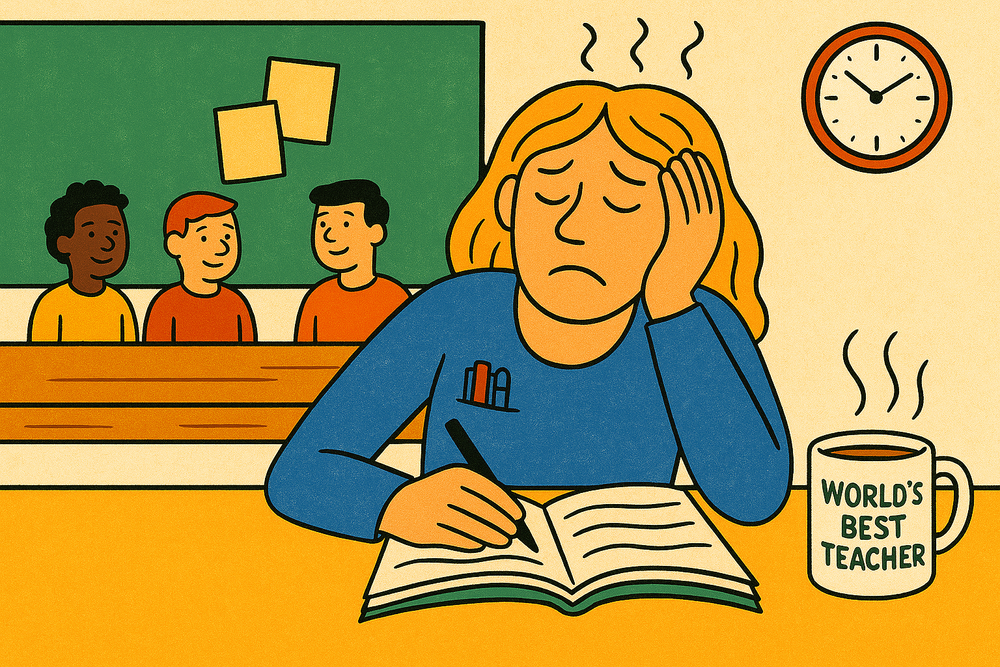
Teachers need support too
Teacher burnout is real. Across Europe, we hear from educators who are passionate but exhausted. When school leaders have practical response training, they are better prepared to:
- Notice when a teacher is struggling
- Offer meaningful, non-judgmental support
- Create a culture where asking for help feels safe
When staff feel seen and supported, they stay longer, perform better, and contribute to a more resilient school.
MHFA-informed response training can help your team have better conversations about mental health, creating a more supportive and compassionate workplace for everyone.
For international schools, context matters
We offer Youth Mental Health Response in English and German, designed specifically for international schools in Germany and across Europe. It is Let's Be Real's independently developed, MHFA-informed curriculum, not an accredited MHFA course.
Whether you're in a bilingual environment or an English-speaking school abroad, you need training that fits your context. We work with leadership teams who want to take action, not just talk about well-being, but embed it.
It’s more than a course. It’s leadership.
Mental health challenges aren’t going away. The question is whether your school is prepared.
Building your leadership team's response capability is one practical way to strengthen your school community. It shows that wellbeing matters, that people matter, and that your school is committed to leading by example.
Staff that feel seen and supported stay longer, perform better, and contribute to a more resilient school.
Ready to start?
We’d love to help.
At Let's Be Real, we deliver Youth Mental Health Response online and in person, in English and German, for schools across Germany and Europe. The curriculum is independently developed and MHFA-informed. Participants receive an LBR-issued professional training certificate, not an externally accredited clinical qualification.
👉 Get in touch to learn more or book a session.
Evidence and sources informing this article: Mental Health First Aid International (opens in a new tab); Morgan et al., PLOS ONE, 2018 (opens in a new tab).
Putting this into practice as a school leader
An example from a school
A secondary school runs a wellbeing week every spring, yet pastoral referrals keep rising and staff say they don't know what to do after a student discloses. The senior team maps what already exists – training records, referral routes, who staff turn to – and finds that only the counsellor feels confident responding. They set one measurable goal for the year: every tutor trained to respond, and a referral route all staff can describe.
Questions to ask your team
- "If a student told you today they were struggling, what would you do next, and who would you tell?"
- "Which of our wellbeing activities can we show have changed anything?"
- "Where do parents go when they are worried about their child?"
Implementation checklist
- Map current training, policies and referral routes before buying anything new.
- Ask staff, not only the wellbeing lead, how confident they feel responding.
- Set one or two measurable goals for the year, for example training coverage or referral clarity.
- Give one named person ownership and protected time.
- Review progress each term and report it to governors or the board.
Research and guidance behind this
- WHO and UNICEF: Mental health and psychosocial wellbeing in schools – WHO and UNICEF framework for a whole-school approach to mental health.
- Crockett et al., JAMA Network Open, 2025 – 2025 meta-analysis of school-based mental health interventions.
- Caldwell et al., The Lancet Psychiatry, 2019 – Evidence on how schools organise mental health provision.
Originally published on letsbe-real.eu.